
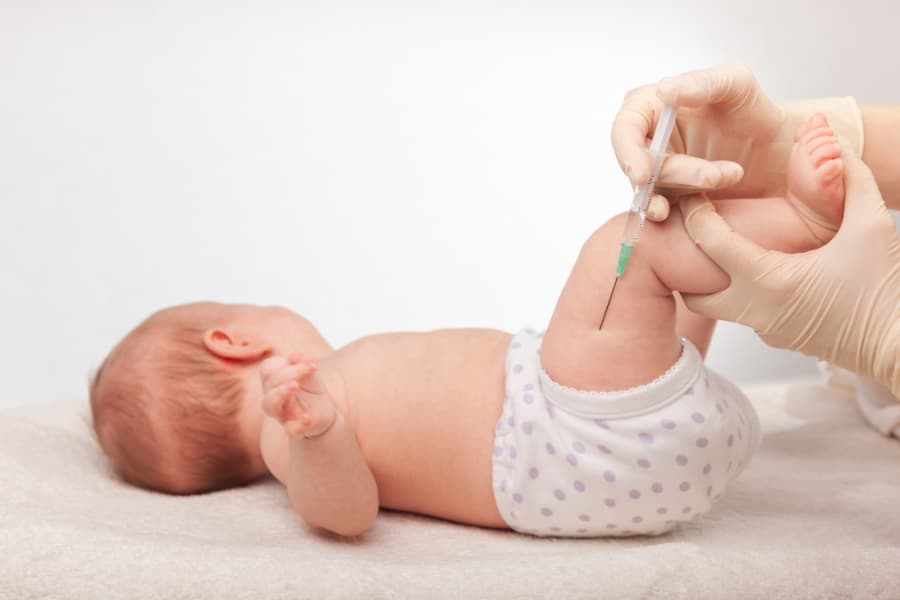
Infant vaccinations play an important role in protecting your child, both now and throughout their life. As a new parent, however, it is natural to feel concerned. Learning more can help you feel more confident about making the right decision for your child. With Touchpoint Pediatrics, find out how to prepare for your baby’s two-month vaccines and what to expect from the appointment and afterward.
Key Takeaways
- Two-month vaccines provide important short-term protection while immunizing your child for lifelong disease prevention.
- Two-month vaccines include the Hepatitis B, Rotavirus, DTaP, Hib, PCV, and IPV vaccines.
- Vaccines may cause mild side effects. You can comfort your child with skin-to-skin contact, swaddling, a cool cloth over sore skin, or a sponge bath to soothe a fever.
Why the Two-Month Visit Matters
When it comes to immunizations, timing is vital. When each vaccine is delivered can have a significant effect on how well it protects your child. A baby’s immune system is still developing, meaning that vaccines can have a lifelong effect. At the same time, an infant is extremely vulnerable to disease. For these two reasons, vaccinations are valuable for both short- and long-term protection.
The recommended vaccine schedule is based on the latest science. Pediatricians carefully weigh two factors: when your child’s immune system will be most responsive to a vaccine, and when they will face the greatest risk of catching that disease. These factors inform the best time to deliver that vaccine.
Which Vaccines Are Given at Two Months?
Your infant’s two-month vaccines include five shots. At Touchpoint Pediatrics, we understand that administering five shots to a two-month-old during one office visit can be traumatizing for both the baby and the parents. We recommend administering the vaccines in two visits, giving three of them during the initial office visit and having you come back in a week or two to administer the rest. We do not charge anything additional for this service.
Each shot protects against an illness that affects small children and can cause lifelong consequences, but which can be prevented with immunization. In fact, illnesses such as whooping cough and polio have been all but eliminated by vaccines. Do not hesitate to ask your Touchpoint pediatrician about the and the benefits of each shot:
- Rotavirus: This protects against a common cause of early childhood diarrhea that rarely affects adults but can be extremely dangerous to infants.
- DTaP: This shot protects against diphtheria, tetanus (lockjaw), and acellular pertussis (whooping cough), three highly contagious illnesses that can be fatal at all ages.
- Hib: This vaccine protects against the Haemophilus influenzae type B bacteria, which primarily affects young children and can cause lifelong disability or death.
- PCV: This shot protects against pneumococcal disease, a serious bacterial infection that can cause pneumonia, meningitis, and ear or sinus infections.
- IPV: This immunization protects against polio, an early childhood disease that infects the spinal cord to cause paralysis, lifelong disability, and possible death.
Some two-month vaccines, including the DTaP, are given as combination vaccines. This means that multiple vaccines are combined into a single shot, instead of being delivered individually. Combination vaccines allow for fewer needle pricks, reducing stress for your baby.
Babies born within the respiratory syncytial virus (RSV) season from October to March are given the RSV vaccine within one week of birth. If the mother received the RSV vaccine at least 14 days before delivery, the baby generally does not need the antibody shot.
If the baby is not born during RSV season, they will get the RSV shot shortly before RSV season begins, when they are under eight months old. This may happen at their two-month appointment if the timing aligns. Some children at high risk may receive the RSV vaccine before their second season.
What to Expect After Shots
Vaccines work by giving your child a tiny number of disease-causing particles. While they have been rendered harmless and won’t make your child sick, your child may experience a few side effects after vaccinations. These include:
- Mild fever
- Swelling or soreness around the shot site
- Irritability or fussiness
- Fatigue or tiredness
- Loss of appetite
- Vomiting
Side effects should only last a short time. If your child’s symptoms do not go away within a day or two, or if they are showing more severe side effects, then contact your pediatrician at Touchpoint Pediatrics.
Comforting Your Child During and After Shots
Infant vaccinations take place in an unfamiliar space full of unfamiliar people. That can be stressful for children, especially small infants who do not understand what is going on. You can comfort your child by cuddling, singing, and talking. Smile and make eye contact to show your infant that everything is okay. You may also wish to bring a favorite toy or blanket as a comfort item.
Afterward, continue to hold and comfort your child. Skin-to-skin contact helps to relieve stress in infants, as does swaddling. A cool, damp cloth can reduce swelling and soreness. If your baby gets a fever, give them a lukewarm sponge bath to help them cool down. Don’t forget to offer plenty of liquids to help your baby recover.
Schedule Two-Month Vaccinations Near You in NJ
Two-month vaccinations are an important step to protecting your child. Schedule your appointment now at Touchpoint Pediatrics. We are located in Chatham, New Jersey, serving Morristown, Summit, Berkeley Heights, Hoboken, and beyond with personalized, family-focused care. Contact us to learn more about our services or to make an appointment with a board-certified pediatrician.
Vaccinations FAQs
How long do side effects last after two-month shots?
Side effects should only last a day or two after two-month shots.
What are the warning signs of an allergic reaction after vaccines?
Warning signs after vaccines include severe swelling, nonstop crying, and a fever over 105 degrees. If your child develops a fever, please contact Touchpoint Pediatrics.
Can my baby get vaccines if they have a mild cold?
Yes, your baby can get vaccines if they have a cold, but please check with your pediatrician at Touchpoint Pediatrics first to make sure.
What’s the schedule for the next well visit after two months?
The next wellness visit should be at four months of age.